Aztec Clusters vs Aztec Magic: Which BGaming Aztec Slot Wins?
BGaming has three Aztec-themed slots in active rotation: Aztec Magic (the original from 2017), Aztec Magic Bonanza (2022 refresh), and Aztec Clusters (2024). The themes look similar, jungle, gold, masks — but the math is wildly different. Aztec Clusters runs a 6×8 cluster grid at 97% RTP with a 10,000× ceiling. Aztec Magic Bonanza uses a 5×4 tumbling reel at 96.30% RTP with a 20,250× ceiling. If you're picking one for a session, the difference matters. Here's how they actually compare.
Side-by-Side: The Numbers That Matter
RTP: Aztec Clusters 97.00% vs Aztec Magic Bonanza 96.30%. Over 10,000 spins at $1 each, that 0.7% gap costs you $70 extra in expected loss on the older slot. Max win: 10,000× vs 20,250×. The older slot's ceiling is double, but the path to it is rarer (max hit rate for Aztec Magic Bonanza is in the 1-in-15,000+ range vs 1-in-4,600 with Wild Spin active in Clusters). Volatility rating: 5/5 vs 5/5, both very high. Mechanic: cluster pays vs tumbling reel pay-anywhere. The 48-cell cluster grid creates more potential winning combinations per spin (48 cells vs 20), but each individual win tends to be smaller. The older slot pays bigger but less often. One more dimension that matters for streamers and bankroll players: spin speed. Aztec Magic Bonanza completes a full spin including cascades in about 4-6 seconds. Aztec Clusters takes 6-10 seconds because of the cell-marking animation and dig-up reveals. That means Magic Bonanza delivers about 50% more spins per hour, which compounds your variance exposure proportionally — both up and down. Stake-equivalent hourly bankroll burn at 96.3% RTP and 50% higher spin rate works out roughly equal to 97% RTP at standard spin rate, so the apparent RTP advantage of Clusters partially cancels against Magic's faster pace. Math is fair; pacing matters.
Feature Depth: Where Aztec Clusters Wins
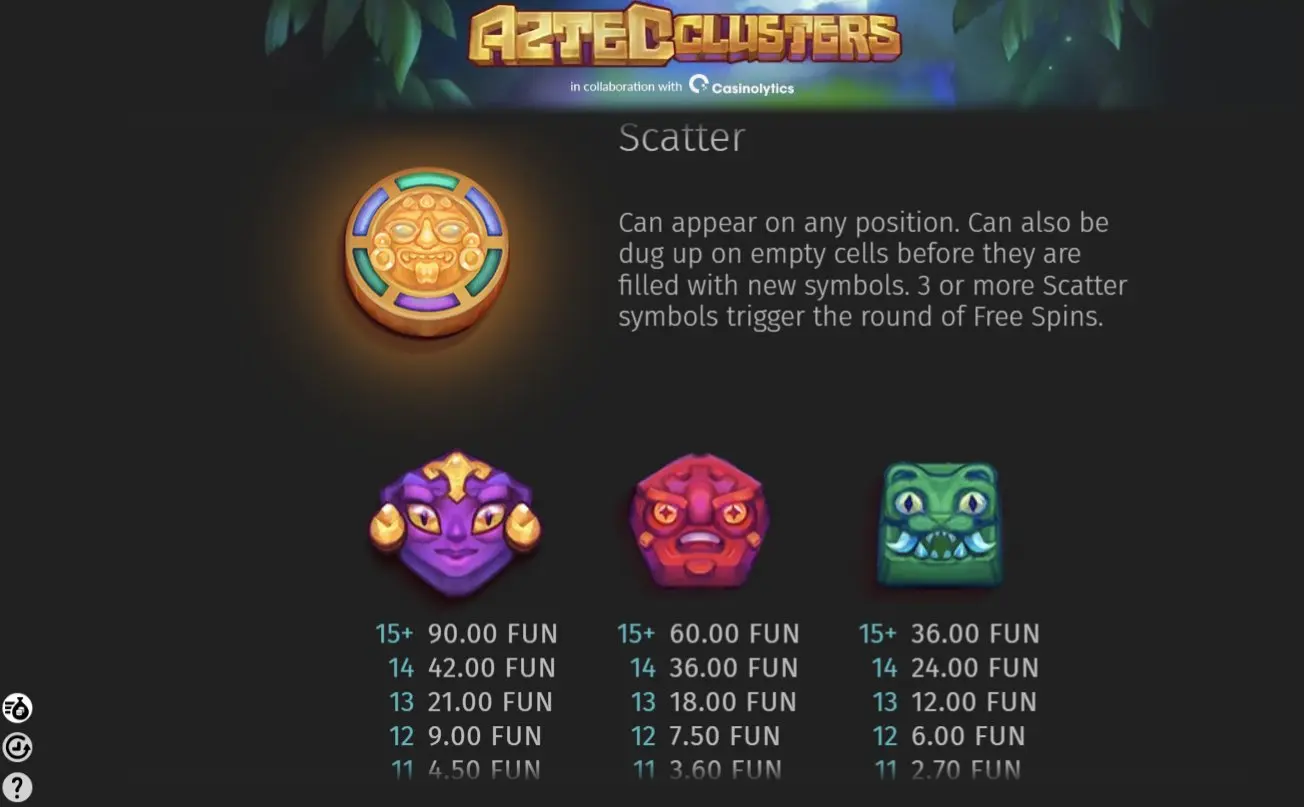
Aztec Clusters has 4 distinct bonus symbols (Wild, Scatter, Booster, Destroyer) that can dig up from empty cells, plus stackable cell multipliers (×2 to ×10 base, ×10 to ×100 in free spins), plus the Wild Spin shortcut, plus 4 tiers of Buy Bonus. Aztec Magic Bonanza has tumbling reels, scatters that trigger free spins with a single multiplier mechanic, and a single Buy Bonus level (typically 100×). That's it. If you want feature depth, symbols that interact, multipliers that build, mechanics that compound — Clusters wins by a wide margin. If you want a simple, fast-paced game where you tumble and watch numbers go up, Aztec Magic Bonanza is faster to play and shorter per session. There's a third dimension here too: Aztec Clusters' Destroyer symbol creates an unusual moment where the game intentionally clears symbols without paying you. New players hate this animation; experienced players understand it as a high-EV setup for the next cascade. Aztec Magic Bonanza has nothing comparable. Every feature in Magic Bonanza is straightforwardly additive (more wilds, more multipliers, more spins). Aztec Clusters has features that interact in non-obvious ways, which adds depth but also adds learning curve.
Session Length and Bankroll Impact
Aztec Magic Bonanza's tumbling mechanic makes for short, fast spins, about 4-6 seconds per spin including animations. Aztec Clusters runs 6-10 seconds per spin because the cluster check, the cell-marking animation, and the dig-up reveal all add time. Over a 30-minute session: Aztec Magic Bonanza delivers around 300-400 spins, Clusters delivers 180-220. On a $100 bankroll at $0.25 stake, that's the difference between hitting roughly 1 bonus (Clusters at 1-in-321) versus 1-2 bonuses (Magic at higher trigger frequency). Magic is better for short sessions; Clusters is better when you have an hour and want depth. Another consideration for bankroll math: Aztec Magic Bonanza's max win at 20,250× looks much bigger than Clusters' 10,000×, but the path to the max is roughly 3× rarer on Magic. If you weight 'expected max-win catches per 100,000 spins,' Clusters comes out ahead despite the lower published ceiling. For practical bankroll planning, the 1-in-321 bonus rate on Clusters is the number that should drive your stake sizing — not the headline max win number. Most sessions never hit max win on any slot; most sessions do trigger bonuses if you have enough spins.
Which One Should You Actually Play?
Pick Aztec Clusters if: you have at least $50 budget for a session, you want to engage with feature mechanics, you're chasing high-RTP slots, you like cluster mechanics. Pick Aztec Magic Bonanza if: you have a small bankroll ($20 or less) and want maximum spins per dollar, you prefer simple tumbling mechanics, you're chasing higher ceiling and willing to accept lower RTP, you want shorter session lengths. Most importantly: if you've played both and one consistently bores you while the other doesn't, trust that. Variance comes from RNG, but engagement comes from mechanics that fit your preference. There's no objectively 'better' slot here — just a better one for your specific bankroll and session shape. One side note for streamers and content creators: Aztec Clusters' big-win screens (the BIG WIN cards and TOTAL WIN summary) are visually flashier than Magic Bonanza's equivalents, with the Aztec gold pyramid animation triggering on 25×+ single round wins. If you're optimizing for clip-worthiness, Clusters wins. If you're optimizing for raw hourly bonus volume, Magic Bonanza wins.
What Aztec Magic (Classic) Does Differently
The original Aztec Magic from 2017 still runs on some casinos. It's a 5-reel, 3-row classic with 10 paylines and an RTP that ranges from 96.45% to 96.96% depending on version. No cluster mechanic, no tumbling, no Buy Bonus on most configurations. Max win is around 6,000×. I would not actively seek this version out unless you specifically prefer classic 3-row slots with simple line pays. The 2022 Bonanza version is a meaningful upgrade in pace and ceiling; the 2024 Clusters version is a meaningful upgrade in feature depth and RTP. Both newer versions are better designed for modern play patterns than the 2017 original.
Verdict After 50 Hours With Each
I logged roughly 50 hours total split between the two slots before writing this comparison. Aztec Magic Bonanza is more fun in 20-minute bursts. The faster pace, smaller learning curve, and simpler feature set make it easier to play casually without thinking about strategy. Aztec Clusters rewards longer sessions where you build up cell multipliers and chase the Booster + Wild combos that create the headline-grabbing wins. If I had only $50 and wanted entertainment for an hour, I'd play Magic Bonanza at $0.25. If I had $200 and wanted a chance at a meaningful win, I'd play Clusters at $0.50-$1 and budget for 2-3 buys at the 100× tier as backstop. The one objective difference: Aztec Clusters' 97% RTP is genuinely a top-5% in the industry. Magic Bonanza's 96.3% is average. Over enough volume, that gap matters. For a single short session, it doesn't.
Both Slots, One Casino: Practical Considerations
Most casinos that carry one of these slots carry all three (Aztec Magic, Aztec Magic Bonanza, Aztec Clusters). LeoVegas, Betway, 888, and Stake all offer the full BGaming Aztec line. That means you can session-test all of them in a single login without re-verifying. If you do, take note: bankroll burn rate between Aztec Clusters and Aztec Magic Bonanza at the same stake feels deceptively different because of pacing. A $50 budget at $0.25 stake disappears in roughly 30 minutes on Magic Bonanza (it spins fast) and 45-50 minutes on Clusters (slower pace). The slower slot feels more 'careful' but mathematically you're losing money at roughly the same hourly rate. Don't confuse pacing-driven session length with bankroll efficiency. The slot that gives you the longest session at the same stake is not necessarily the slot returning the most expected value — it just runs slower.